Synthetic Web Slings
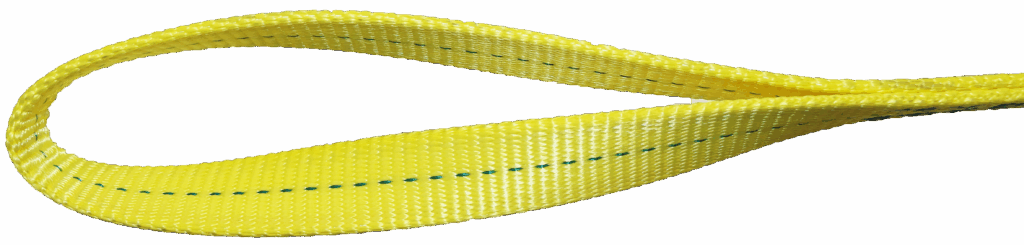
Web slings are often used to lift fragile loads. Webbing provides a soft surface against the load, therefore, protecting it from damage. We offer many types of synthetic web slings such as Eye & Eye, Endless, and Multi-Leg Spreaders.
The different sling types are used for a secure connection to any load. For example, flat slings allow for easy removal from under a narrow load. These work well with basket hitches and similar load types.
Length Tolerances for Web Slings
| Sling Type | Length Tolerance* |
|---|---|
| 1-Ply | ± (1.5” + 1.5% of sling length) |
| 2-Ply | ± (2.0” + 2% of sling length) |
| 3-Ply & 4-Ply | ± (3.0” + 3% of sling length) |
| *For exact matching length slings, please contact us! |
Sling Storage and Maintenance
- Slings should be stored in a cool, dry and dark location, away from dirt, abrasives, or contaminants to maintain the optimum lifting capacity.
- Cleaning slings to remove dirt, grime, and abrasives (such as sand or caliche) will help to prolong service life. These contaminants wear the fibers and reduce their strength.
- Slings should be cleaned with a mild soap. Capacity tags must be legible. After rinsing the sling, it should be hung to air dry.
Polyester vs. Nylon
- Polyester and nylon webbing should not be exposed to temperatures exceeding 180°F due to softening (or actual melting) of the fibers.
- Consult the table to the right with regard to the effects of chemicals on synthetic web slings.
- Coatings are available for longer service life and wear resistance.
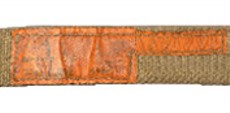
- Wear pads can be provided to minimize the effects of rough surfaces or angles which can abrade or cut the sling fabric.
| Chemical | Nylon | Polyester |
|---|---|---|
| Acid | NO | * |
| Alcohol | OK | OK |
| Aldehydes | OK | NO |
| Strong Alkalis | OK | ** |
| Bleaching Agents Dry | NO | OK |
| Cleaning Solvents | OK | OK |
| Ethers | OK | NO |
| Halogenated Hydrocarbons | OK | OK |
| Ketones | OK | OK |
| Oil, Crude | OK | OK |
| Oil, Lubricating | OK | OK |
| Water, Sea Water | OK | OK |
| Weak Alkalils | OK | OK |
* Disintegrated by concentrated sulfuric acid. ** Degraded by strong alkalis at elevated temperatures |
Protecting Slings from Damage
Environmental Considerations
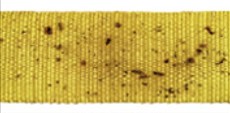
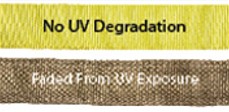
Environmental factors such as sunlight, dirt, and temperature/humidity changes can accelerate web sling deterioration. The rate depends on exposure and sling thickness, with single-ply slings degrading faster than multi-ply slings. Web slings used outdoors regularly should be removed from service within 2 to 4 years and highly scrutinized during inspections. Visible signs of deterioration include the following:
- Fading of color.
- Uneven or disoriented surface yarn of the webbing.
- Shortening of sling length.
- Reduction in elasticity and strength of the sling material due to exposure to sunlight. Often evident by accelerated abrasive damage to the surface of the sling.
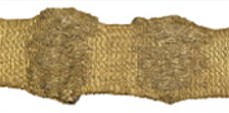
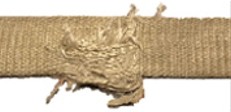
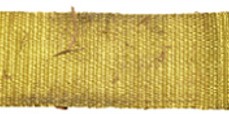
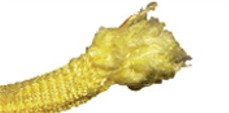
- Breakage or damage to yarn fibers, evident by a fuzzy appearance of the web.
- Stiffening of the web, which can become particularly evident when web slings are exposed to outdoor conditions without being used or cyclically tensioned.
Mechanical Considerations
Avoid any action that may cause sling damage such as:
- Dropping or dragging slings.
- Pulling Slings from under loads while the load is resting on the sling.
- Shortening or adjusting sling using methods not approved by the sling manufacturer or qualified person.
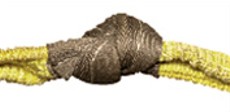
- Twisting, kinking or knotting the sling.
- Exposing Slings to acids, alkalis, heat damage or weld splatter.
- Using slings or allowing exposure to temperatures above 194°F (90°C) or below -40°F (-40°C).
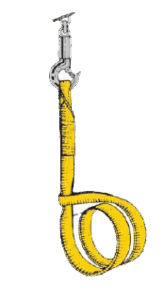
- “Tip loading” a sling on a hook instead of centering it in the base or “bowl” of the hook.
- Using hooks, shackles or other hardware that have sharp edges or surfaces.
- Running/driving over slings with a vehicle or other equipment.
Synthetic slings can degrade due to certain chemicals, with the extent influenced by time, temperature, and concentration. Water absorption can reduce the strength of nylon web slings by 10-15%, which is restored upon drying. For specific applications, consult the manufacturer.
Protection Considerations
Synthetic web slings can be damaged, abraded or cut as tension and compression between the sling, the connection points and the load develops. Surfaces in contact with the sling do not have to be very abrasive or have “razor” sharp edges in order to create the conditions for sling failure. Therefore, web slings must ALWAYS be protected to prevent sling damage.
There are a variety of ways to protect slings from damage. A qualified person might select and use appropriately engineered protectors or softeners—commercially available products such as:
- Sleeves
- Wear pads
- Edge wraps
- Body wraps
- Corner protectors
- Other purpose-built devices
A qualified person must ensure that the protection method chosen is appropriate for the specific types of damage the sling may encounter. For example, some protection offers abrasion resistance but provides little to no defense against cuts.
Several “test” lifts, done in a non-consequence setting may be necessary to determine the suitability of the protection device(s). After each “test” lift, the protection device(s) and the sling(s) need to be inspected for damage and suitability. You should keep in mind that no protection is “cut proof” and you should always operate within the specified limits of the sling and its accessories.
⚠️ WARNING ⚠️
Failure to follow the care, use, and inspection instructions of a sling could result in severe personal injury or death.
Do NOT exceed rated capacities.
Inspection
Slings must be regularly and properly inspected. Even seemingly “minor” damage to a web sling can significantly reduce its capacity to hold or lift objects and increases the chance that the sling will fail during use. If you are not sure whether a sling is damaged, DO NOT USE IT.
How to Inspect Slings
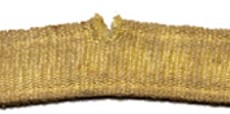
To detect possible damage, you should perform a visual inspection of the entire sling, and also feel along its entire length, as some damage may be feltmore than seen.
What to Do If You Identify Damage In a Sling
If you identify any types of damage in a sling, remove it from service immediately. Slings that are removed from service must be destroyed and rendered completely unusable.
Frequency of Inspection – ASME B30.9-5.9
A three-stage procedure is recommended to help ensure that web slings are inspected with appropriate frequency.
- Initial Inspection – Slings must be inspected by a designated person as soon as they are received. This ensures that the correct web sling has been received, is undamaged, and meets the requirements for its intended use.
- Frequent Inspection – The entire sling must be inspected before each shift or day in Normal service and before each use in Severe service applications.
- Periodic Inspection – Every sling must be inspected “periodically” by a qualified and designated person. The frequency of periodic inspections is based on the sling’s actual or expected frequency of use, severity of service conditions, and the nature of the work performed with the sling.

Removal Criteria
Possible Defects – ASME B30.9-5.9
A sling shall be removed from service if any defects such as the following are visible:
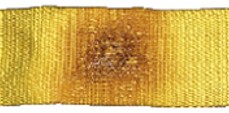
- Acid or Caustic burns.
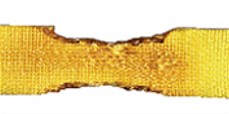
- Melting or charring of any parts of the sling surface.
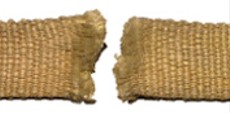
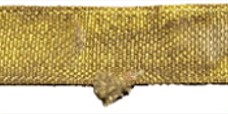
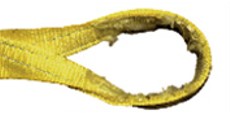
- Snags, punctures, tears, or cuts
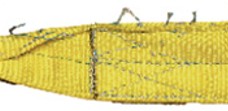
- Broken or worn stitches.
- Wear or elongation exceeding the amount recommended by the manufacturer.
- Distortion of fittings.
- Other apparent defects which cause doubt as to the strength of the sling should be referred to the manufacturer for determination.
Common Hitches for Web Slings
Vertical Pull
Vertical Pull
A method of rigging in which the load is attached to one end of the synthetic web sling, usually being attached by means of a hook or shackle, and the other end of the sling is attached to the lifting device. A tag line should be used to prevent load rotation.
WARNING: Any single sling hitch must never be used to transport a load that is not balanced.
Basket Hitch
Basket Hitch
A method of rigging in which the synthetic web sling is passed around the load and both ends are attached overhead.
WARNING: Rated capacities are affected by the sling to load angle when used in multi-leg bridles or basket hitches. Sling angles of less than 30 degrees are not recommended.
Choker Hitch
Choker Hitch
| Angle of Choke Degree | Rated Capacity |
|---|---|
| Over 120 | 100% |
| 90–120 | 87% |
| 60–89 | 74% |
| 30–59 | 62% |
| 0–29 | 49% |
Double Wrapped Choker Hitch
A method of rigging in which the web sling is passed around the load twice and then through itself, normally through the sling eye, and then attached to the lifting device.
WARNING: Any single sling hitch must never be used to transport a load that is not balanced.
Increased Tension on Slings Used at Angles
Another important consideration is the sling-to-load angle, which is the angle formed between a horizontal line and the sling leg or body. This angle is very important and can have a dramatic effect on the rated capacity of the sling. When the sling-to-load angle decreases, the load on each leg increases. Sling angles less than 30 degrees are not recommended.
| Degrees from Horizontal | Tension Factor |
|---|---|
| 90 | 1.000 |
| 85 | 1.004 |
| 80 | 1.015 |
| 75 | 1.035 |
| 70 | 1.064 |
| 65 | 1.104 |
| 60 | 1.155 |
| 55 | 1.221 |
| 50 | 1.305 |
| 45 | 1.414 |
| 40 | 1.555 |
| 35 | 1.742 |
| 30 | 2.000 |
Proper Hitching Methods for Web Slings
Single Leg Hitch
Single Leg Hitch
Single leg hitches such as the single leg vertical and the single choker hitch may not provide optimum control over the load. In these hitches only one synthetic web sling supports the load. In a single choker hitch, there is always a part of the synthetic web sling at the choke point not in contact with the bundle being lifted.
Double Wrapped Choker Hitch
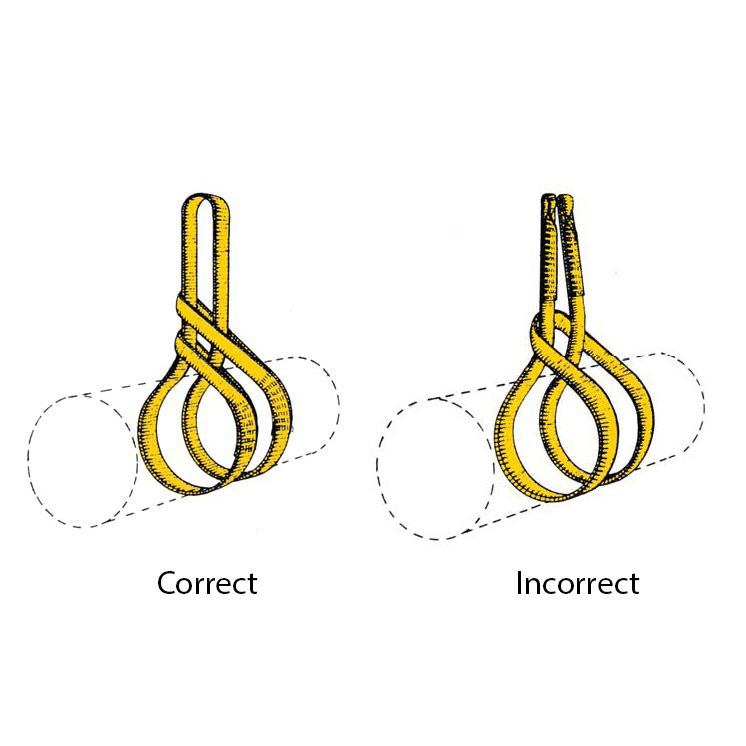
The double wrap choker hitch or the double wrap hitch provides full 360-degree contact with the load.
WARNING: When using a double-wrap hitch, avoid overlapping slings, as it can lead to uneven load distribution, sling damage, and compromised safety.
Double Choker Hitch
Double Choker Hitch
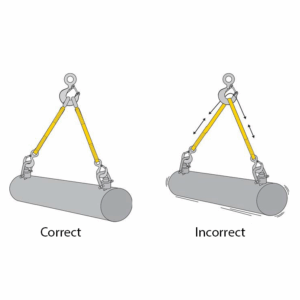
The double choker hitch appears to be preferred by many riggers because it is twice as strong as a single choker hitch in the same sling type. When this hitch is made in the right way, both legs will automatically equalize over the crane hook. However, when it is made wrong, there is usually no equalization and one of the legs will support most of the load
Basket Hitch
Basket Hitch
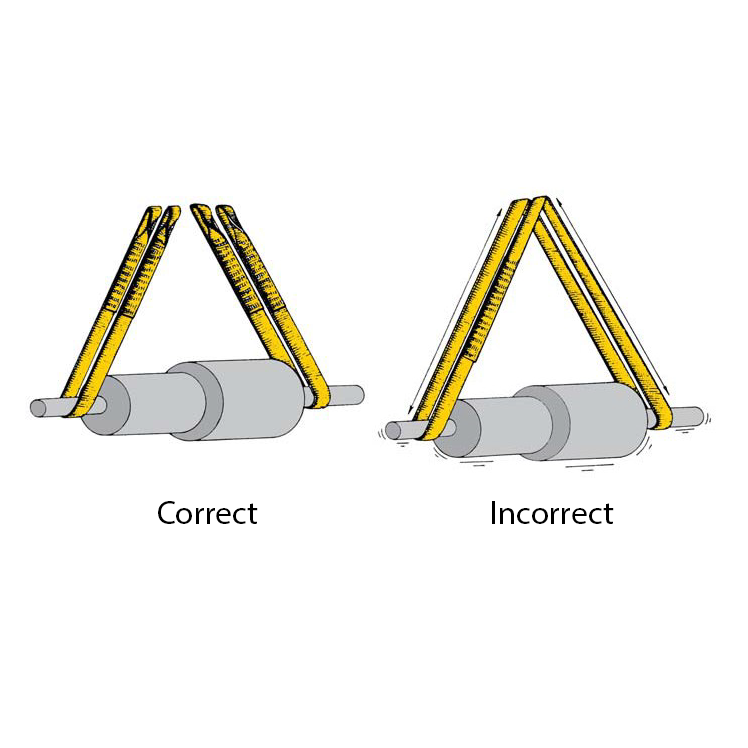
Basket hitches, whether single or double, may be used successfully in a variety of applications. However, they have inherent limitations.
WARNING: As sling angles decrease, the risk of slings skipping across the load or the load slipping out of the slings becomes greater, creating an unbalanced condition.
Turning Hitch
Turning Hitch
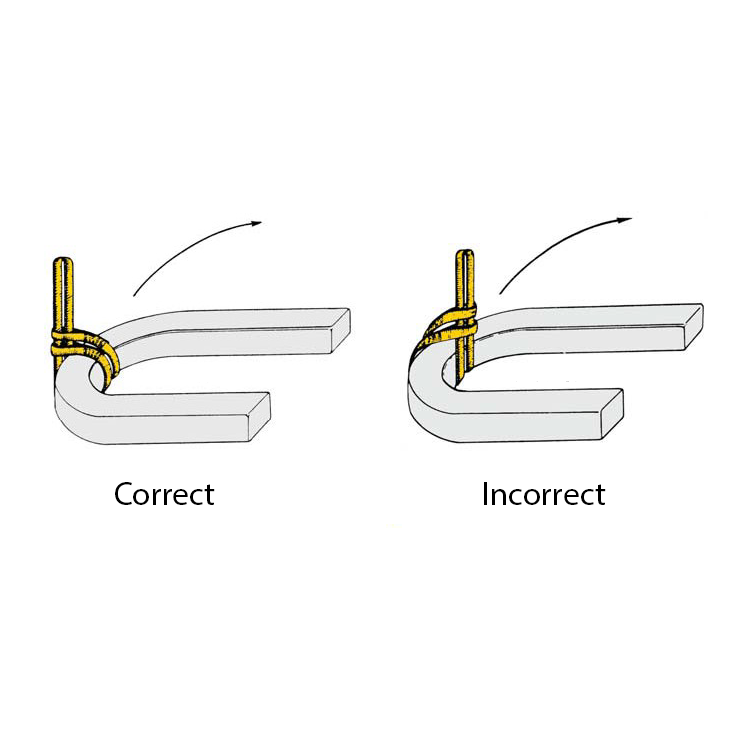
When turning a load, always use a choker hitch. If the turning hitch is made the wrong way, the turning action of the load will loosen the hitch. Note: A basket hitch should not be used for turning a load, causing it to slip.
WARNING: A basket hitch should not be used for turning a load
Two Ends Down Single Basket Hitch
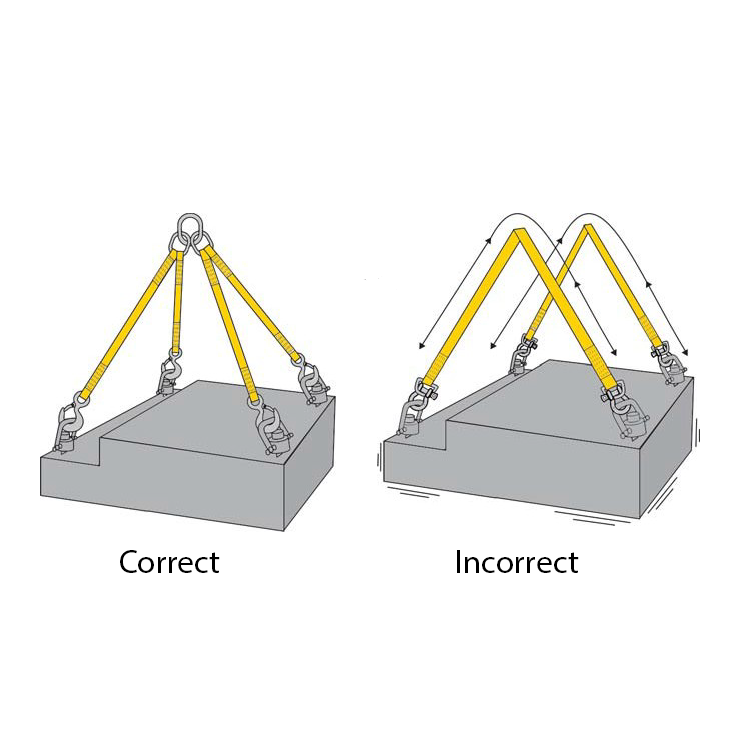
The following hitches can all be classified as “hook equalizing hitches.” Since the bite of the sling is on the hook, the sling is free to slip through the hook according to the distribution of weight on the various legs. There are dangers to be avoided in the use of these hitches.
Four Ends Down Single Basket Hitch
Can’t find what you’re looking for?
Contact Us! We offer custom solutions and expert guidance to help ensure a safe and efficient lift.